
A water heater leak can release dozens of gallons of water into your home within minutes.
When a tank fails or a supply line bursts, water often spreads quickly into flooring, walls, and
adjacent rooms.
If your water heater has leaked, act immediately.
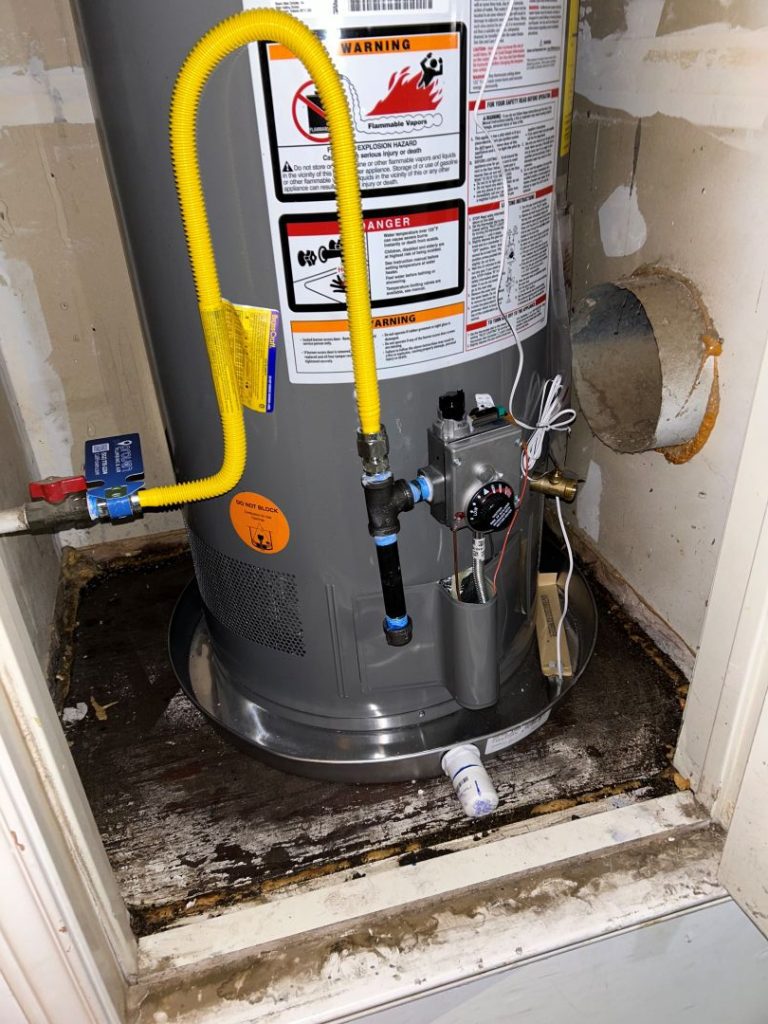
What to Do Right Now
Document visible damage with photos.
Even if the visible water seems contained, moisture often travels beneath flooring and into wall cavities.
- Shut off the water supply to the water heater.
- Turn off power or gas to the unit if it is safe to do so.
- Avoid standing water near electrical outlets or appliances.
- Move belongings out of the affected area if possible.
Why Water Heater Leaks Cause Extensive Damage
Water heaters are typically located in:
- Garages
- Utility closets
- Attics
- Interior mechanical rooms
When a tank fails, water can:
- Flow under baseboards
- Saturate drywall
- Soak subflooring
- Travel beneath tile or laminate
- Spread into adjoining rooms
In slab-built Central Texas homes, water can migrate quickly before it becomes visible.
Common Causes of Water Heater Failures
- Corrosion inside aging tanks
- Sediment buildup
- Failed temperature and pressure relief valves
- Rusted supply lines
- Improper installation
- Freeze-related stress during cold snaps
During freeze–thaw cycles, weakened components can crack or fail suddenly.
Signs Damage May Be Worse Than It Looks
- Warped or buckling flooring
- Damp or musty odors
- Bubbling paint near baseboards
- Soft drywall
- Water staining in adjacent rooms
Water damage is often more extensive than surface moisture suggests.
What Professional Water Heater Leak Cleanup Involves
At Taylor Restoration Services, our emergency response focuses on stopping secondary
damage quickly and thoroughly.
Professional restoration typically includes:
- Emergency water extraction
- Moisture detection behind walls and beneath flooring
- Removal of saturated materials when necessary
- Controlled structural drying
- Decontamination and sanitization as needed
- Ongoing moisture monitoring
Proper drying is critical. Incomplete drying can lead to odor, material deterioration, or microbial
growth later.
Service Areas
We provide emergency water heater leak cleanup throughout:
- Austin
- Cedar Park
- Round Rock
- Georgetown
- Manor
- Hutto
- San Marcos
- Surrounding Central Texas communities
If you are unsure whether your area is covered, contact us directly.
Why Early Action Matters
Water damage spreads quickly. What begins as a mechanical failure can escalate into flooring
replacement, drywall removal, and structural repairs if not addressed promptly.
Early assessment reduces:
- Repair costs
- Disruption
- Risk of secondary damage
Emergency Response
If your water heater has leaked, immediate action can prevent further damage.
Call for emergency water removal and professional assessment.
Water Heater Leak FAQs
Most residential water heaters in Central Texas hold between 40 and 80 gallons of water. If a tank fails completely, that volume can be released quickly.
In addition to the stored water, pressurized supply lines may continue feeding water into the system until the main shutoff is closed. That means actual water exposure can exceed the tank’s listed capacity.
Even a 40-gallon release can saturate flooring, drywall, and adjacent rooms within minutes.
In many Texas homeowner policies, sudden and accidental water heater failure is typically covered.
However, coverage depends on:
The cause of the failure
The condition and age of the unit
Whether the damage was sudden or gradual
Specific exclusions in the policy
Insurance often covers resulting water damage but may not cover replacement of an aging or poorly maintained unit. Reviewing your individual policy or speaking with your adjuster is important.
Cleanup timelines depend on:
The amount of water released
How quickly the leak was discovered
The materials affected
Whether contaminated water was involved
For many residential water heater ruptures, initial water extraction and setup of drying equipment occurs the same day. Structural drying typically takes three to five days, depending on moisture levels and building materials.
Full repairs, if needed, may extend beyond the drying phase.
In many cases, homeowners can remain in the home while professional drying equipment operates.
However, this depends on:
The extent of damage
Whether flooring or drywall must be removed
Noise levels from equipment
Any safety or air quality concerns
Each situation is assessed individually. If contamination or significant demolition is involved, temporary relocation may be recommended.
Mold growth becomes a risk when moisture remains in building materials for an extended period.
In Central Texas, warm temperatures and humidity can increase that risk. Proper water extraction, controlled drying, and moisture monitoring significantly reduce the likelihood of microbial growth.
Prompt professional drying is the most effective prevention.