
A washing machine leak can release significant water into your home, whether caused by a burst supply hose, a loose fitting, or a failed internal component. In many cases, water spreads beneath the flooring and behind walls before it is discovered. Prompt response limits structural damage and secondary issues. We regularly respond to washing machine leaks throughout Austin, particularly in homes where supply lines are more than eight years old.
If your washing machine leaks, immediate action matters.
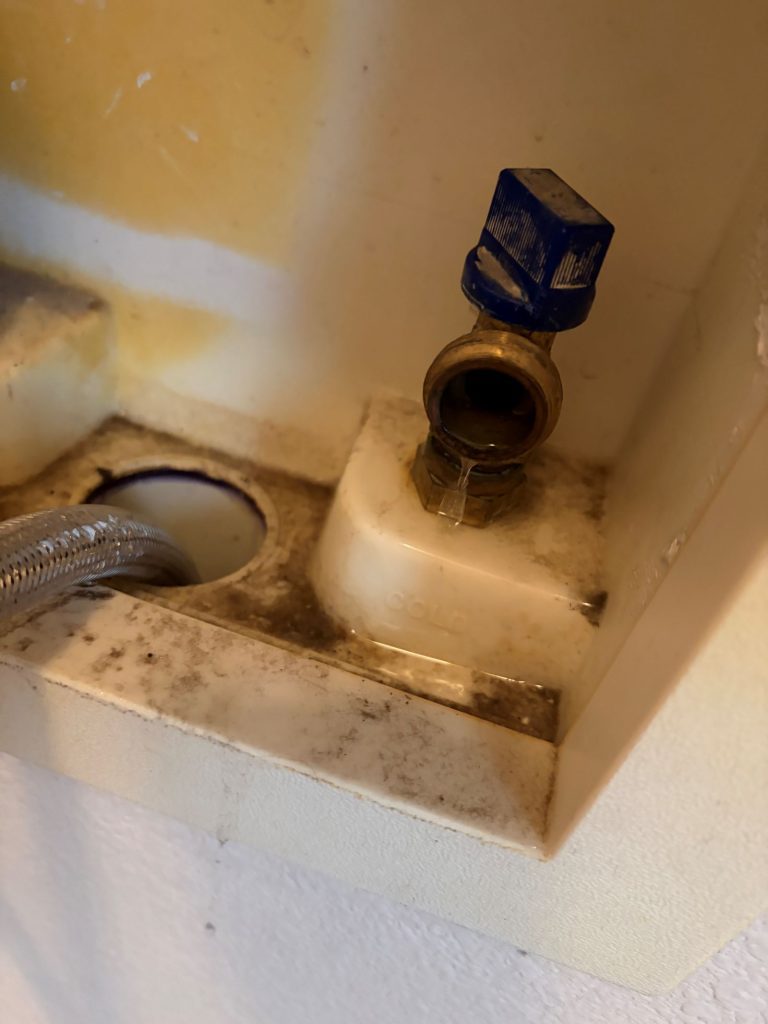
What to Do Right Now
you see water around your washing machine or laundry room floor, act quickly.
- Shut off the water supply valves behind the washing machine.
- Turn off the machine and unplug it if safe to do so.
- Avoid walking through standing water near outlets or appliances.
- Move nearby belongings out of the affected area.
- Document visible damage with photos.
Even if the surface appears manageable, water often travels under flooring and into wall cavities quickly.
Why Washing Machine Leaks Spread Quickly
Burst hoses are one of the most common causes, but slow leaks from fittings or internal seals can cause similar damage over time.
In Central Texas homes, laundry rooms are commonly located:
- Inside interior hallways
- Near bedrooms
- On second floors
- Adjacent to kitchens or garages
When a hose bursts:
- Water can migrate into subflooring
- Baseboards wick moisture upward
- Drywall absorbs water at the bottom edge
- Ceiling damage can occur below second-floor units
Because these failures are sudden, damage is often extensive before it is discovered.
Common Causes of Washing Machine Leaks
- Aging or cracked rubber supply lines
- Loose supply connections
- Failed internal pump seals
- High water pressure
- Freeze-related stress during cold snaps
Rubber hoses older than five years are especially vulnerable.
Signs Damage May Extend Beyond the Laundry Room
- Warped or buckling flooring
- Damp carpet in nearby rooms
- Musty odors
- Soft drywall near baseboards
- Staining on ceilings below
Water follows gravity and building materials. Damage is rarely isolated to one small area.
What Professional Cleanup Involves
At Taylor Restoration Services, emergency response focuses on stopping secondary damage quickly.
Professional restoration may include:
Emergency water extraction
Removing standing water immediately to limit spread.
Moisture detection
Using meters and thermal imaging to locate hidden moisture.
Targeted removal of saturated materials
Removing damaged baseboards or drywall only where necessary.
Controlled structural drying
Deploying professional drying equipment to bring materials back to safe moisture levels.
Ongoing monitoring
Verifying that flooring, framing, and walls are fully dry before repairs begin.
Proper drying prevents long-term odor, material deterioration, and microbial growth.
Service Areas
We provide emergency washing machine hose burst cleanup throughout:
- Austin
- Cedar Park
- Round Rock
- Georgetown
- Manor
- Hutto
- San Marcos
- Surrounding Central Texas communities
Washing Machine Leak FAQs
Because supply lines are pressurized, a leaking hose can release water continuously until the valve is shut off. In some cases, dozens of gallons may flow before the leak is discovered.
Sudden and accidental hose bursts are often covered under homeowner policies. Coverage depends on policy terms and whether the failure was sudden versus due to long-term neglect.
Initial water extraction usually happens the same day. Structural drying typically takes three to five days depending on how far the water traveled and which materials were affected.
In many cases, yes. However, this depends on the extent of damage and whether demolition or contaminated materials are involved.
How can I prevent washing machine hose failures?
Replacing rubber hoses with braided stainless steel lines and inspecting supply connections annually can reduce risk. Turning off supply valves when leaving home for extended periods also lowers exposure.
Emergency Response
If your washing machine hose has burst, early intervention can reduce structural damage and repair costs.
Contact us for emergency water extraction and professional drying assessment.